

Answer first: you reduce pet allergens by physically removing them, on a schedule. Wash the coat, wipe the paws, vacuum with a sealed HEPA filter, launder the bedding weekly, and clean up urine properly instead of covering the smell. No product makes a home allergen-free, and anyone promising you one is selling something.
Watch the whole problem happen in about four seconds. Dog comes in from the yard, does the full-body shake in the hallway, and goes straight to your pillow. That is the delivery route. Everything else here is just details.
Why are my allergies worse in spring if my pet lives here year round?
Two things stack. Your pet drops a winter coat, and outdoor pollen climbs at the same time. Neither is new. Together they tip your house past the point where you can ignore it.
Shedding runs on daylight, not temperature, which is why it starts before the weather agrees to. Meanwhile the pollen half has been quietly getting worse. Anderegg and colleagues reported in PNAS in February 2021 that across 60 North American monitoring stations, pollen seasons now start about 20 days earlier and carry 21% more pollen than in 1990.
Same house, same dog, considerably rougher April. You are not being dramatic.
Am I allergic to my pet's fur?
No. It is protein in their dander, saliva and urine. Fur is the delivery truck, not the cargo.
The Asthma and Allergy Foundation of America puts cat and dog allergies at 10 to 20% of the world's population and names the trigger as protein in dead skin cells, saliva and urine. Your pet grooms, the saliva dries on the coat, it flakes off, it goes airborne.
Then there is the size problem. Research by Custovic and colleagues found that 20 to 25% of airborne pet allergen travels on particles under 5 microns, small enough to hang in a room with no help from anybody and small enough to reach your lower airway. So the fur you can see on the couch is the polite, visible fraction. Picking it off with a lint roller feels productive and is mostly decorative.
Is my dog bringing pollen into the house?
Yes, and this is the piece you have the most control over. A coat is a fantastic pollen collector, and every trip outside is a delivery.
Your dog is a shuttle with no idea it is a shuttle. Grass, tree pollen, whatever is blooming at knee height, all of it lands on the coat and rides in to the couch and the bed.
The good news is that pollen sits on top rather than coming from inside. It rinses off. Dander does not work that way, but pollen genuinely does, so a wipe-down after a long walk on a high-count day earns its keep.
Does bathing my dog actually reduce allergens?
It does, and for less time than you would hope. This is the most oversold claim in pet care and we would rather you hear it from us.
The study everyone should quote is a 1999 paper in the Journal of Allergy and Clinical Immunology by Hodson and colleagues, which carries possibly the most honest title in allergy research: "Washing the dog reduces dog allergen levels, but the dog needs to be washed twice a week." Allergen on the coat dropped. It came back within days.
Nobody bathes a dog twice a week, and with most shampoos nobody should. So a bath is a reset button, not a fix. What you do between baths is where this is actually won.
We sell shampoo. We are still telling you the bath is the smaller half.
Would a hypoallergenic breed fix this?
No, because there isn't one. AAFA says it plainly: a truly non-allergic dog or cat does not exist.
Vredegoor and colleagues measured the dog allergen Can f 1 across breeds for the Journal of Allergy and Clinical Immunology in 2012 and put the finding right in the title: no evidence supports calling any breed hypoallergenic. Low-shedding is a real trait. Low-allergen is a marketing one. Your doodle is wonderful and is not a medical device.
What actually reduces pet allergens in a home?
Match the action to the source. Every allergen in your house lives somewhere specific and comes out a specific way. Line them up and the routine writes itself.
| Comes from | Ends up | What removes it | How often |
|---|---|---|---|
| Dander (skin flakes) | Carpet, upholstery, the air | Sealed HEPA vacuum, damp wiping | Twice weekly |
| Dried saliva on the coat | Wherever they go, so everywhere | Bathing, coat wipe-downs | Bath every 2 to 4 weeks |
| Dried urine protein | Carpet padding, subfloor | A cleanup that breaks the urine down | Every accident, right away |
| Pollen riding the coat | Your couch, your bed, your pillow | Wipe-down after outside | High-count days |
| All of the above, settled | Pet beds, blankets, throws | Hot wash, 130°F or hotter | Weekly |
That last line comes from AAFA's indoor allergen guidance, which also asks you to keep humidity between 30 and 50% and use a vacuum with a sealed HEPA filter, so what you pick up does not come back out the other end.
Where we fit, honestly:
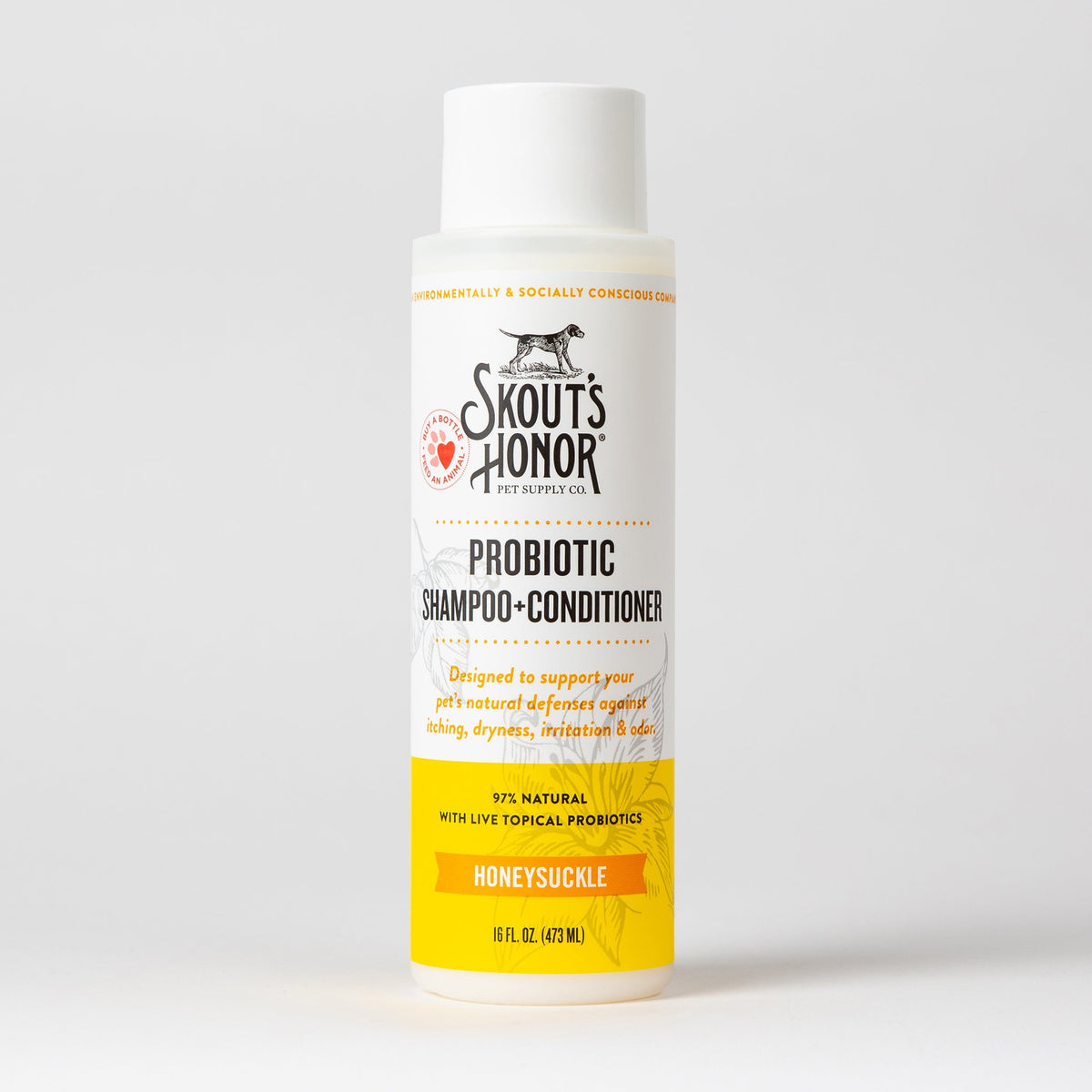
Bath day. Our Probiotic Shampoo + Conditioner is a gentle 2-in-1 with live probiotic kefir, avocado and argan oils, 97%+ natural, no parabens or sulfates, and Microbiome-Friendly Certified, meaning MyMicrobiome independently validated that it does not disrupt the skin's natural microbiome. It lathers less than you are used to. Sulfates make suds, suds do not make clean.
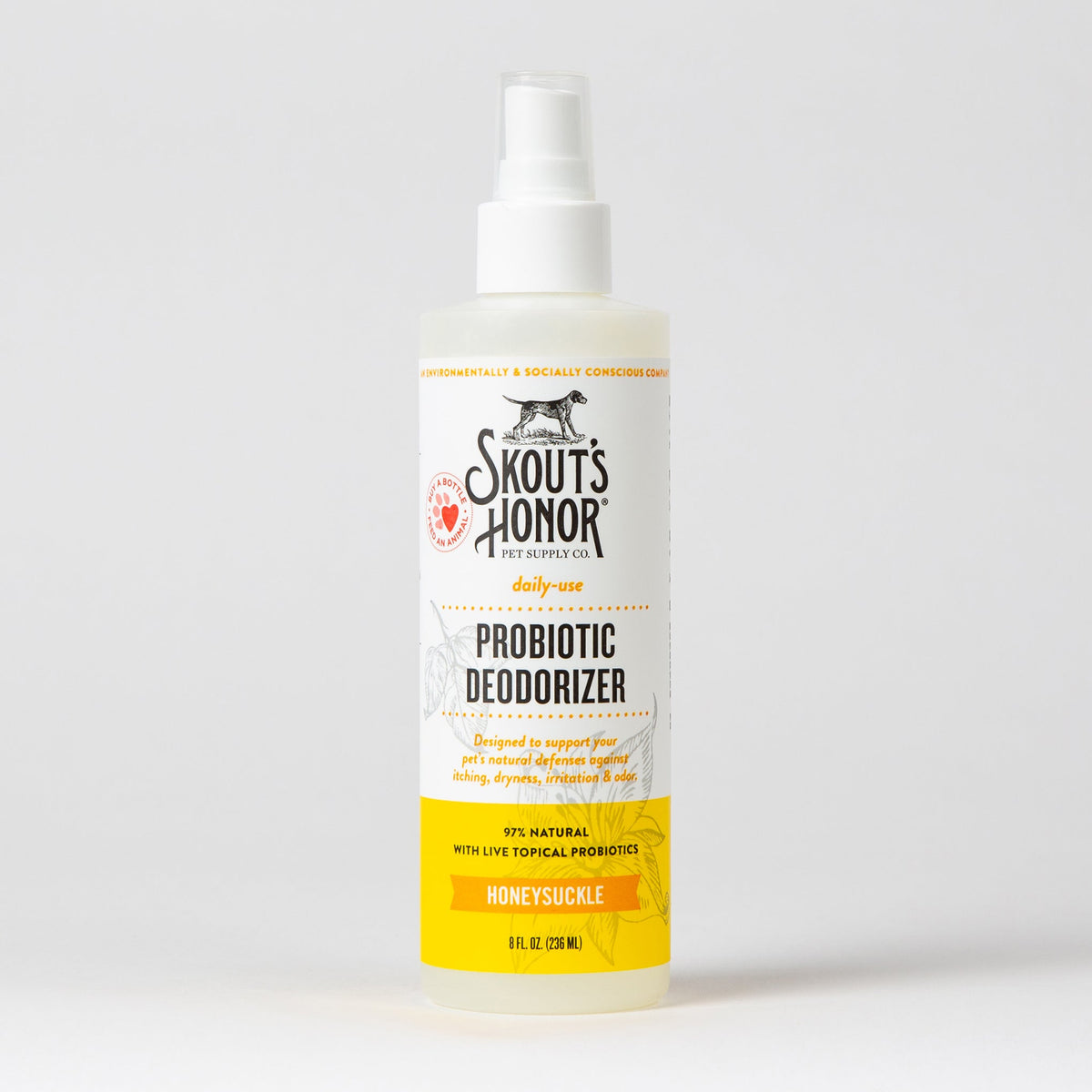
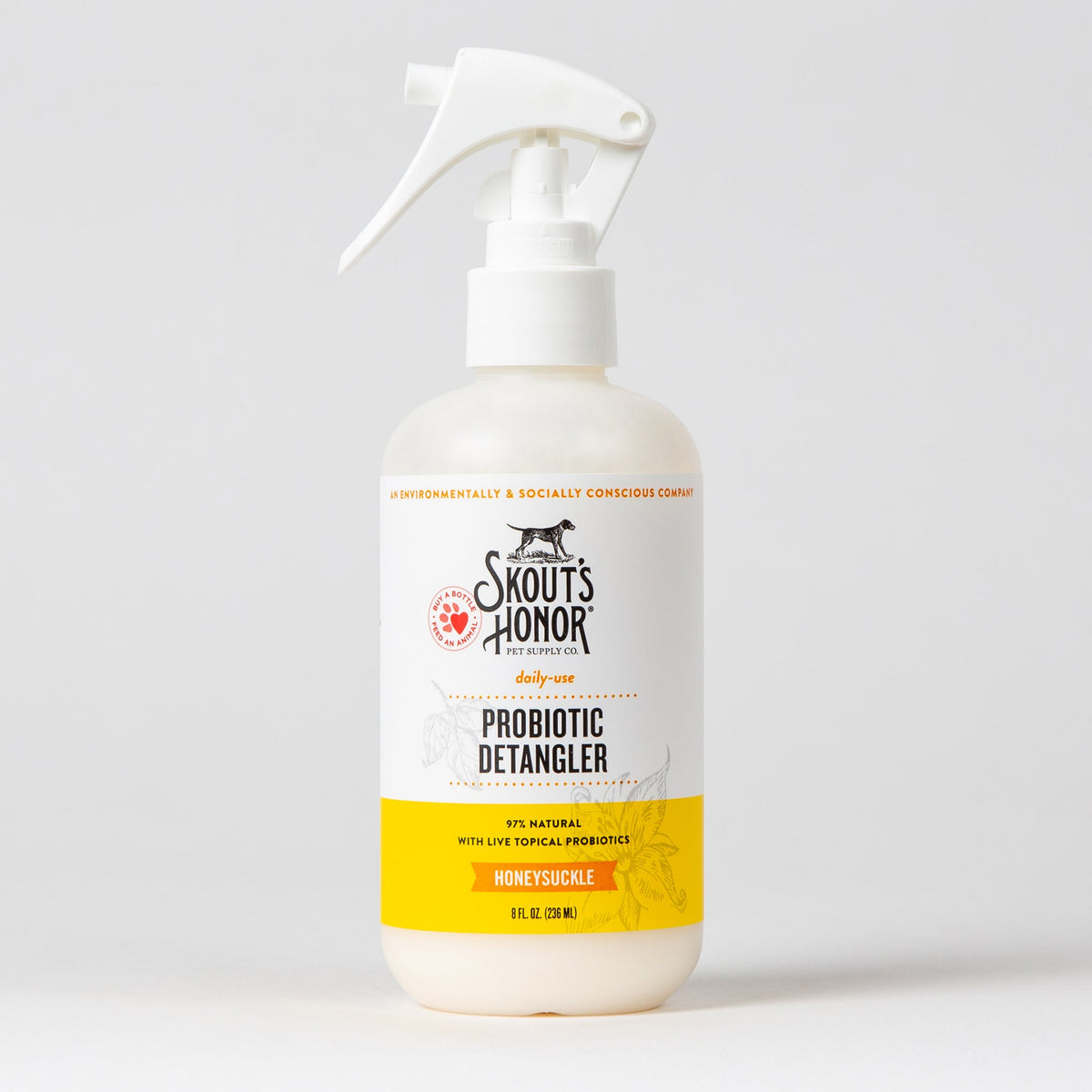
In between. The Probiotic Deodorizer is a few sprays that hydrate skin, soften the coat and buy you time before the next bath. Long or double coat? The Probiotic Detangler smooths and releases mats, which matters here because a mat holds on to everything the coat picked up and a brush cannot get in there.
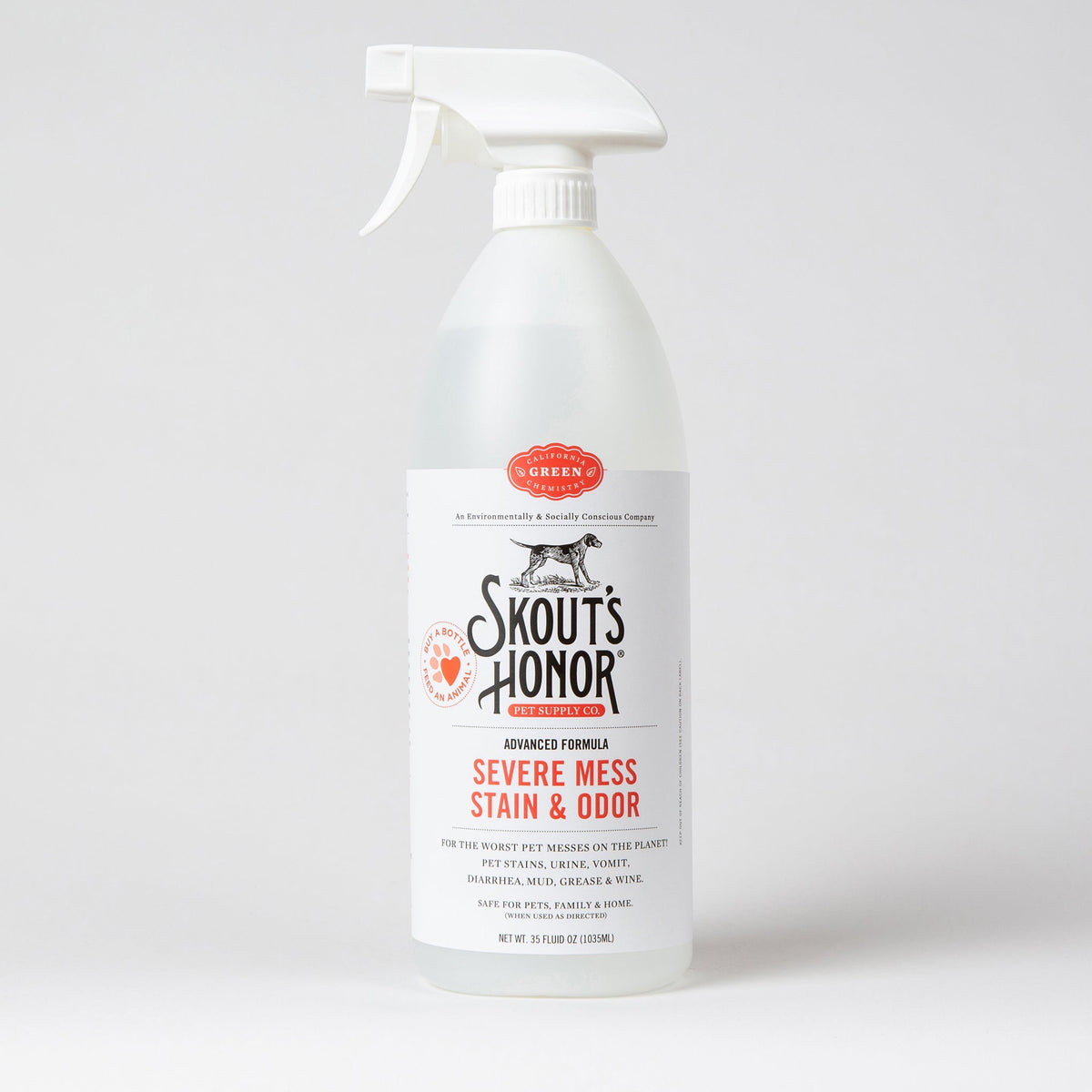
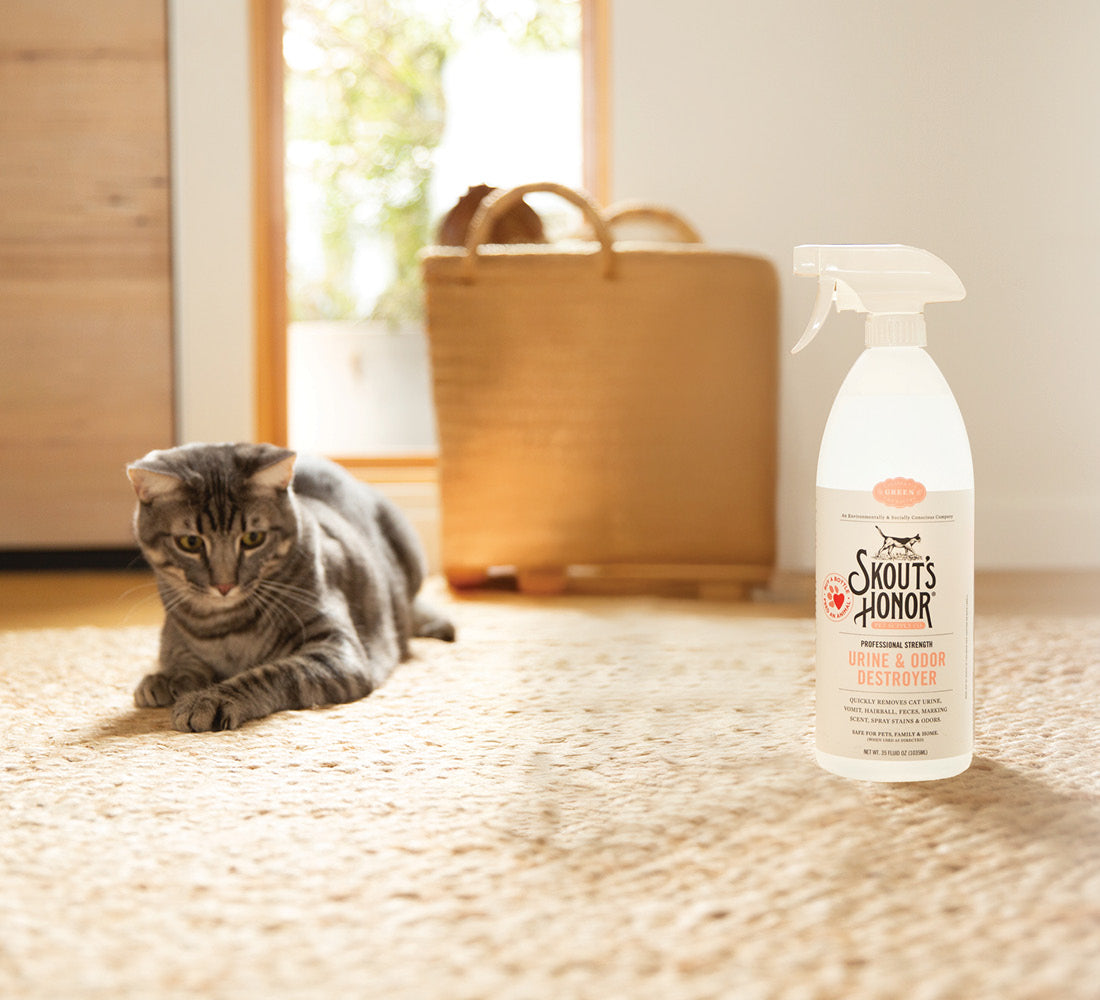
Accidents. Dried urine is a real allergen source, so spraying something floral over it is a costume, not a cleanup. Our Urine Destroyer breaks down urine stains and eliminates odor molecules at the source, no pretreating, no expiration date. The Stain & Odor Remover covers the rest of the greatest hits, including wine. Both work best on fresh messes, so on a set-in stain, soak it generously and blot instead of scrubbing.
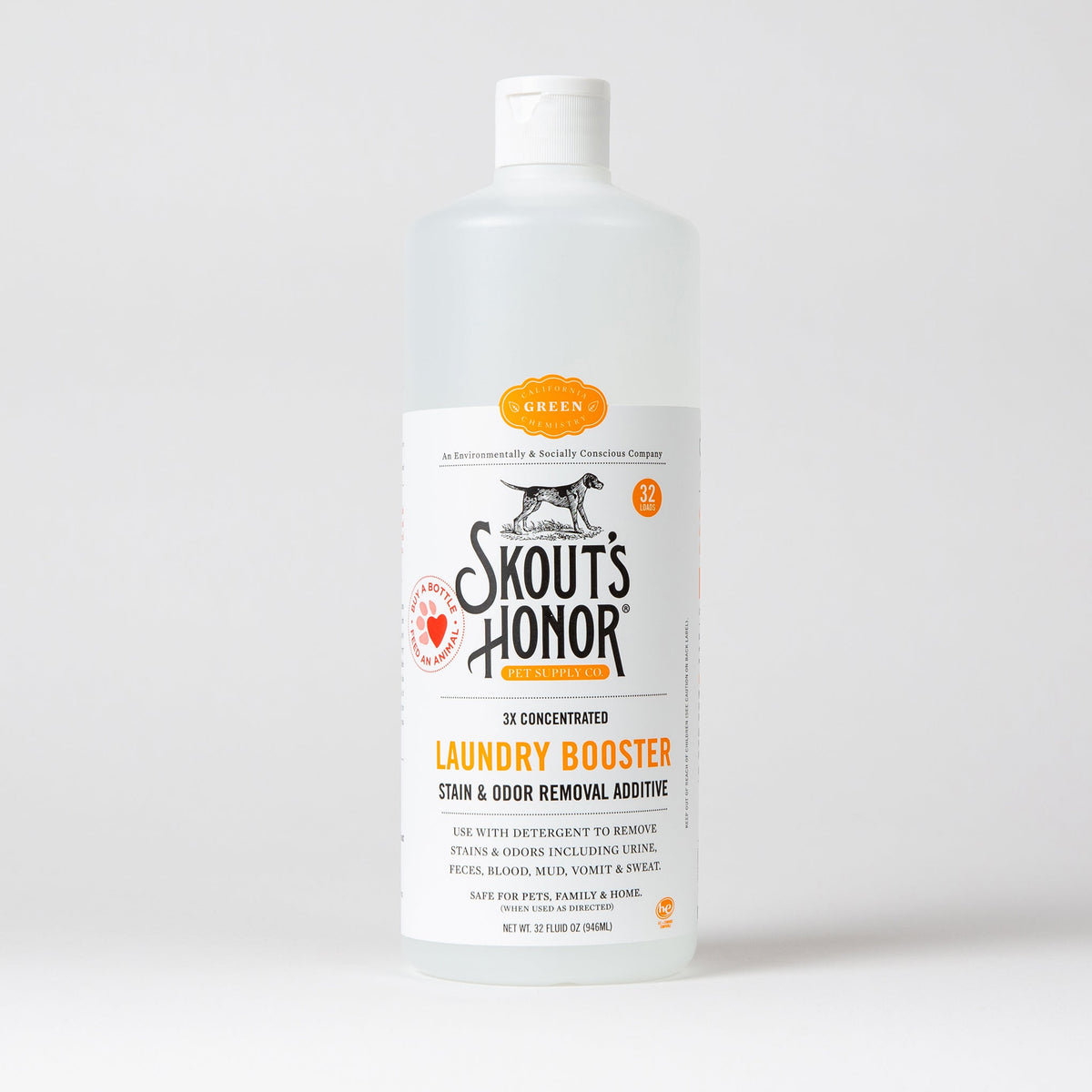
Soft surfaces. Odor Eliminator for beds, couches and car seats, and Laundry Booster in the wash with the blankets.
Give it three or four weeks before you judge it. You are looking for fewer rough mornings, not a miracle.
When should I call a doctor, or a vet?
Cleaning is not a diagnosis, for you or for them.
Call your doctor if symptoms keep climbing, if over-the-counter options are not touching it, if you are wheezing, or if this is costing you sleep. Allergy testing tells you what you actually react to, which beats another season of squinting suspiciously at the dog.
Call your vet if your pet is scratching nonstop, has raw skin, bald patches or ear trouble, or if their appetite or energy has changed. Pets get allergies too, and that is a different conversation. Start with why your dog might be scratching when it is not fleas, or for cats, the most common cat allergies.
Spring keeps showing up earlier every year. Build the routine once and it mostly runs itself. When you are ready, here is our probiotic skin care lineup, and every bottle feeds an animal in need.
FAQ
How do I reduce pet allergens in my home? Remove them physically, on a schedule. Vacuum twice weekly with a sealed HEPA filter, wash pet bedding weekly at 130°F or hotter, bathe your pet every two to four weeks, wipe the coat and paws after time outside, clean urine accidents completely, and keep indoor humidity between 30 and 50%.
Am I allergic to pet fur or pet dander? Dander, plus proteins in saliva and urine. AAFA identifies the trigger as protein in dead skin cells, saliva and urine. Fur carries it, fur is not it.
Are pet allergies worse in spring and summer? Usually. Pets shed winter coats as daylight increases while outdoor pollen rises and rides indoors on the coat. Anderegg and colleagues found in PNAS in 2021 that North American pollen seasons start about 20 days earlier and carry 21% more pollen than in 1990.
Does bathing my dog reduce allergens? Temporarily. A 1999 study in the Journal of Allergy and Clinical Immunology by Hodson and colleagues found allergen levels rebounded within days and that twice-weekly washing was needed to hold them down. Treat the bath as a reset and do the wiping and laundering in between.
Are there hypoallergenic dogs or cats? No. AAFA states a truly non-allergic dog or cat does not exist, and a 2012 JACI study measuring Can f 1 across breeds found no evidence for any breed being hypoallergenic.
Can cleaning products remove pet allergens? Cleaning removes them mechanically, by lifting them off surfaces and out of fabric so they can be carried away. That is what a HEPA vacuum, a hot wash and a real urine cleanup are doing. No cleaning product neutralizes or destroys allergens, and be skeptical of any that claims it does.
Why Is My Dog Scratching If It's Not Fleas?
What Does A Spring Cleaning Include? The Pet Parent Edition